
He thought he was going to help those who appeared to need it. He ended up being the one who was saved.
Recently, I checked-in with a client I worked with last April, and I posted an update on LinkedIn he had shared with me back in July.
Then, this week, he wrote to tell me some exciting news.
I hope you find it as fascinating and uplifting as I do.
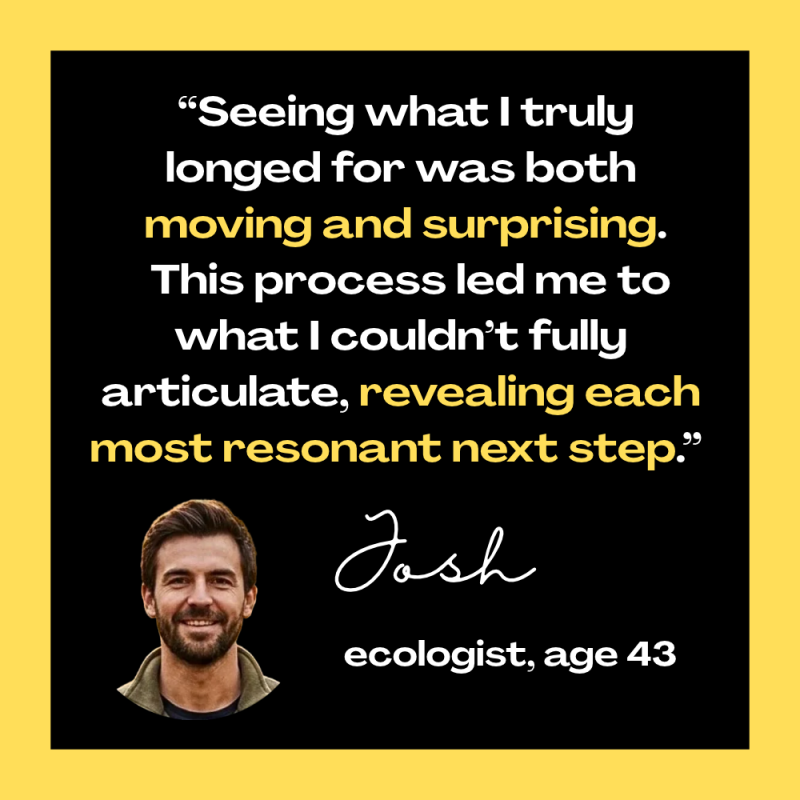
When we first started working together, Josh was feeling disconnected and lonely. He had recently gone through a divorce, was living alone, and his work as an ecologist only emphasized how dire our environmental challenges had become.
As we worked together, Josh recognized his longing for meaningful engagement. “I want to focus on something I can actually do, and that benefits life in general.”
In his reflections over the course of his week-long series with me, he became curious about those living along the creek on his way to work. He wondered who they were, what had led them to live there, and how he might help them.
Josh chose “Clear the creek” as his personal directive, which to him meant taking water samples and looking at ways to protect the water source the people there relied upon.
On the day he planned to talk to someone who lived there, he was nervous. He expected that he would not be welcomed, and was worried about his personal safety.
I’m ashamed of how I pictured the people there, and how I thought I was going to swoop in and make life better for them. The truth is that the community, with about 40 people, including kids, is doing remarkably well. They aren’t polluting the creek or destroying the land the way I assumed. In fact, they are very aware of their surroundings, and show real care.
The first person he met introduced himself as Henry, a nod to Henry David Thoreau, and greeted Josh warmly. Henry had sought permission from the owner of the nearby farm to set up a living area along the creek. The owner was curious about Henry’s idea to build a small structure made of mud and straw, along with a rain catchment system, a solar-heated shower, a composting toilet, and an outdoor oven. The owner approved of the plans, got the permit, and told Henry he was welcome as long as there was no harm done to the creek and all rubbish was promptly and properly hauled out.
That was nine years ago. The owner died, and left his property to his son, who agreed to allow Henry to stay in exchange for some property maintenance, including caring for the fruit orchard and vegetable garden.
Then, three years ago, others started to arrive, and set up their tents along the creek. The son asked Henry to manage things so there were no problems.
Henry is someone I really respect. He grew up on a commune, and has a serious set of skills, everything from construction and repairs to vegetarian cooking on a budget. The guy designed and built (with help from the others) an enclosed kitchen, pantry, and dining structure that seats everyone, along with a solar-powered washing machine and enclosed heated drying space. There are beautiful showers made from recycled glass bottles, and the whole camp feels whimsical and inviting.
And Henry is a natural facilitator, which I think was his former profession, though he won’t talk about it. He’s the glue of the place, but there are a couple of women who are incredible organizers. Together, they ensure that people are safe, fed, and comfortable.

Josh and Henry
Josh began stopping by the encampment, which the residents call Creekside, twice a week on his way home from work. He was impressed by the respectful way residents treated each other. Henry told him about their code of conduct: no guns, no smoking, no drugs, no alcohol, and meat-free shared meals. Everyone works together in the garden and orchard, prepares meals on a rotating basis, and engages in whatever projects they dream up.
I couldn’t believe how smoothly things seemed to function. People work together, side by side, even when they disagree. There’s a circle where disputes are discussed. It’s been amazing to see how it works.
Josh started showing up on weekends, too. He helped with various projects, including an expansion to the pantry to store the preserved food. He stayed for the Saturday Soup Nights, and lingered around the table with the others for “meandering and meaningful” conversations.
But each time Josh drove home after a visit, he asked himself why he wasn’t having Soup Nights with his own neighbors. So, he knocked on a few doors with a simple invitation to join him for soup in his apartment the following Sunday.
Showing up at the creek shifted something in me. I recognized how judgmental I was, how I didn’t think I could have anything in common with them. But I have made real friends there, and we have a number of things in common. They actually encouraged me to get over my fear of knocking on doors and invite my neighbors to my place!
So, how’d it go? Josh was clear that there were some awkward moments. He learned the next day that two feuding neighbors who hadn’t been in the same room together for a decade happened to show up, each expecting the other not to come.
I wish I could say it was great, but it was just...nice. And maybe nice is all it takes to get started. I am committed to giving it time, and dropping my preconceived ideas about others.
He organized a couple of other gatherings, but the interest just wasn’t there. Josh felt he wasn’t good at hosting, and asked his Creekside friends for advice.
That’s when they invited him to move there and become a part of their community.
At first, Josh was unsettled. He had a good job, an apartment. Most of the Creekside residents had lost housing due to fires, medical debt, or repeated lay-offs that made it hard to pay rent. Others had jobs they enjoyed and simply loved feeling like they had a supportive community to come home to.
Josh knew he really liked the people and the way they were choosing to live and work together. But despite their warm invitation, he felt guilty, as though he was taking a spot from someone who needed it more than he did. After all, each resident (including kids) was contributing $100 per month, which paid for the food and other expenses for the community.
Josh made over 70 times that.
He stayed up late talking to Henry, who made no attempt to talk him into anything. Josh told him that he did not want to feel he was taking advantage, nor did he want to run away from the pain of his divorce and the loss of his father two years earlier.
He went back to his apartment that had never felt like home.
And he couldn’t stop thinking about moving to Creekside.
Henry recommended that I spend a week there before deciding. It had been a decade since I had even been camping! There’s a guest cottage that residents use for family members who visit. The first week I stayed there, I felt giddy. I couldn’t wait to come home from work and take my turn in the kitchen or help Henry with the playground addition. I stayed up talking to other residents. I went to sleep feeling relaxed and happy, and slept better than I have in years.
Josh gave notice that he was leaving his apartment when his lease was up in two months. During that time, he joined Henry and the others to finish the new straw bale dwelling that would become his home.
It took him weeks to tell anyone about his move.
I realized that my resistance was purely ego and conditioning about what my life should look like at 43. Last week, I finally told a couple of co-workers about my move. They were stunned, but they also commented that I seemed a lot happier. They asked plenty of questions, and it made me see how lucky I am.
Josh’s story isn’t a common one, but I love it because it shows what is possible when we tap into our longing and release our old ideas about how we should live.
PROMPT
What about Josh's story sparks a bit of longing in you?
Thank you for being here!
I so appreciate you and your interest in learning about the power of longing.
If you're feeling overwhelmed by all that's happening in the world and in your own life right now, I would love to hear from you.
I invite you to start a conversation with me here.